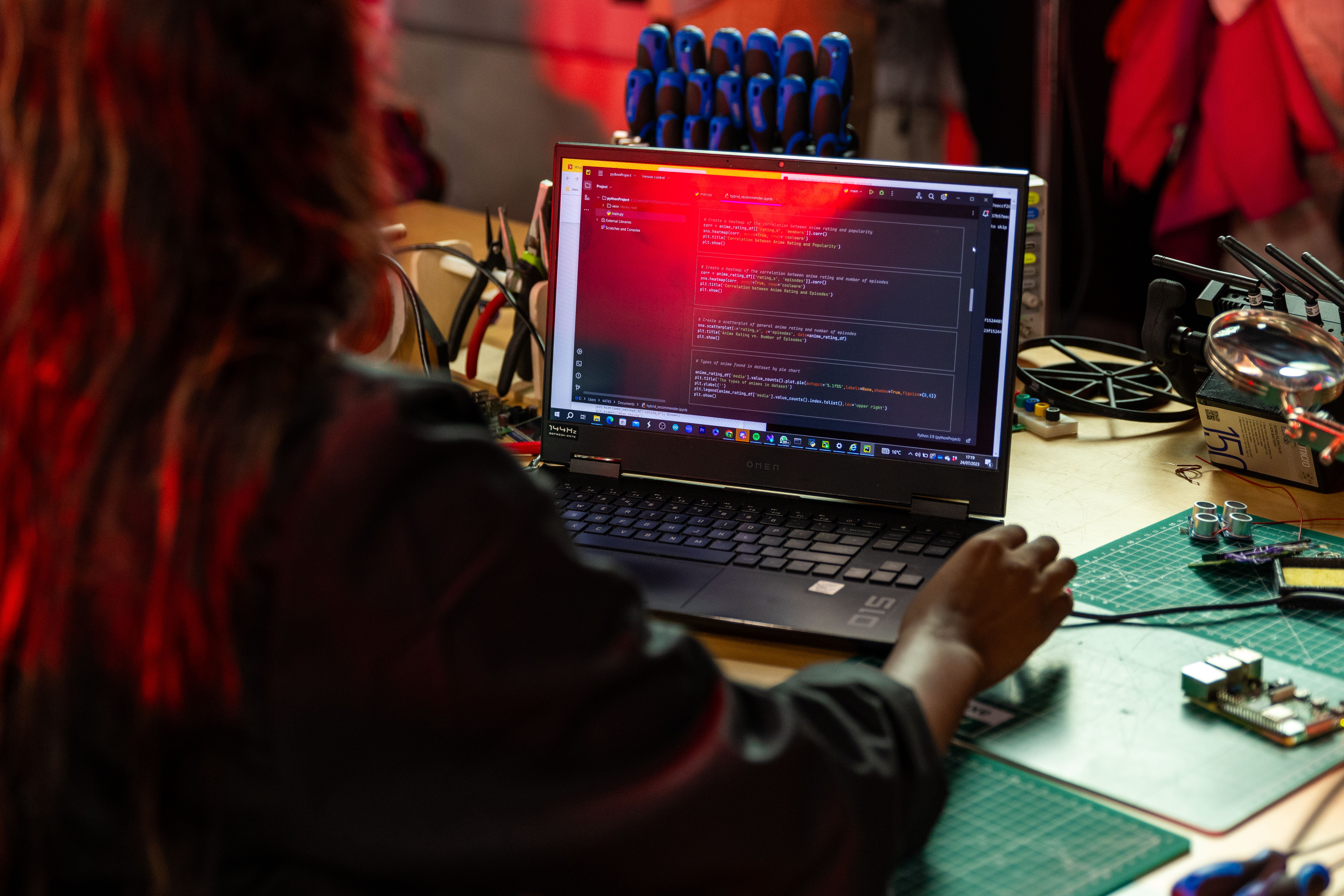

Remote hiring has unlocked access to global talent, but it has also introduced a disturbing new challenge: the person you interviewed may not be the person who shows up to work. Here we tech you how looking a candidate identity verification in remote hiringWith AI-generated avatars, deepfake video tools, and resume fabrication bots becoming mainstream, companies must now ask a harder question, not just “is this candidate qualified?” but “is this candidate real?”
This is not a hypothetical situation. In 2024, the FBI issued warnings about how remote workers were using AI to misrepresent their identities during video interviews. Increasingly, tech companies in the US have unknowingly hired individuals who outsourced their own technical evaluations or were not who they said they were to begin with.
At Cafeto Software, we have developed a nearshore model that tackles this issue head-on.
1. The emergence of AI-Driven Identity Fraud in Recruitment
It has become incredibly easy to:
- Create hyper-realistic video avatars that replicate human behavior during real-time interviews
- Create fake work histories, qualifications, and LinkedIn profiles on a massive scale
- Cheat on AI-driven tests using LLMs that solve coding tests in seconds
According to a 2024 Gartner report, 25% of job applicants worldwide are predicted to be AI-Driven or completely fabricated by 2028. This is especially true in completely virtual recruitment processes where no human interacts with the applicant in person.
Industries such as cybersecurity, fintech, and health care, in which data access is immediately critical, are especially at risk.
2. The 5 most common identity risks in digital hiring
1. Deepfake video interviews
Real-time deepfake technology enables the replacement of a candidate’s face and voice during a Zoom interview. What to look out for: suspicious eye movement, audio-video delays, pixelation of the jaw and ear areas, and vagueness about spontaneous, off-topic questions.
2. Proxy test-takers
A candidate shares his screen for a coding test, but a third party actually takes the test. Companies can use the following: cameras-on, randomized question sets, and time-pressured formats that prevent delegation.
3. Fabricated credentials
Deepfake technology enables the fabrication of realistic-appearing diplomas, GitHub profiles, and other credentials. Companies can use the following: direct verification of credentials by calling the issuing institution, checking the actual commit history of the GitHub profile (when was the profile actually created?), and using verification tools such as HireRight or Checkr.
4. Ghost workers
A hired candidate disappears, only for another individual to report for work on the first day of employment. Companies can use the following: biometric verification of new employees, photo identification, and video introductions of new employees with the hiring manager.
5. Social engineering through AI chatbots
Some candidates use LLMs to respond to text-based technical interviews in real-time, appearing highly competent in asynchronous scenarios.
3. What a reliable verification process looks like
A good defense strategy is a multi-layered process that incorporates technology and human judgment:
LAYER 1: IDENTITY CONFIRMATION
- Verification of government ID prior to the first interview
- Biometric/video liveness check implemented twice: in the screening phase and upon offer acceptance
- Verification of residential and physical address
LAYER 2: SKILLS VALIDATION
- Live technical interviews with open-ended, contextual questions, rather than algorithmic questions
- Randomized follow-up questions that require domain intuition, as opposed to memorization of data
- Pair programming or whiteboarding to observe thought processes
LAYER 3: BACKGROUND CHECKS
- Criminal background checks
- Employment history verification, including a call to previous employers, as opposed to an email
- Verification of educational qualifications
LAYER 4: CULTURAL & BEHAVIORAL ASSESSMENTS
- Reference calls to previous managers, asking behavioral questions
- Team fit interviews with new team members before making an offer
LAYER 5: ONBOARDING VALIDATION
- Requirement of a live, camera-on onboarding session with photo ID presented to the HR
4. How nearshore partners like Cafeto solve this
Working with a nearshore staffing partner like Cafeto Software adds a critical layer of accountability that cannot be replicated by a fully remote, self-directed hiring process.
This is how Cafeto Software ensures the integrity of the hiring process for our US-based clients:
Physical presence in LATAM
We are not a group of anonymous global freelancers, but rather local professionals from Colombia and Mexico. We know who they are, where they work, and how they work.
Structured vetting, every time
We vet every candidate through a series of steps: technical interview, background check, behavioral interview, and a reference check, all before the candidate even meets your team. We also offer the option for our clients to be a part of the interview process.
Dedicated hardware
We provide a laptop for every engineer we place. This ensures that the individual using the laptop is the individual we vetted, not a third party accessing the laptop remotely.
Our 7% retention advantage
Our employee retention rate is a mere 7%, one of the lowest in the nearshore industry. Our engineers are long-term professionals, not anonymous freelancers who change every month.
HR Integration
We become an extension of your HR department, monitoring engagement, performance, and cultural alignment on an ongoing basis.
5. Best practices checklist for HR Teams
- Government ID verification before first interview
- Have at least one spontaneous, unscripted video call
- Use live pair programming instead of asynchronous tests
- Verify GitHub repos via commit date and contribution depth
- Call references instead of emailing them
- Work with a nearshore firm that has physical accountability
- Government ID verification before first interview
- Require camera on during onboarding and photo ID confirmation
- Audit system access within first 30 days
Conclusion
The good news is that AI has made hiring faster. But the bad news is that it has also made hiring riskier. The answer isn’t to stop hiring remotely. The answer is to hire with a system that has human accountability built in. Whether you build these verification layers yourself or you have a trusted nearshore provider like Cafeto on your side, the end result is the same: you know exactly who you’re bringing onto your team before they’ve ever laid hands on your codebase.
Want to build a vetted and trustworthy tech team from Colombia or Mexico? Let’s chat.
Book a Consultation to learn about engineering operations to Colombia:
https://outlook.office.com/book/[email protected]/?ismsaljsauthenabled
Learn about: The Changing Economics of the H-1B Visa here